
When someone sits down at a casino game, the most natural question that comes to mind is simple.
Can I win?
The flashing lights of slot machines, the spinning roulette wheel, and the tension of a blackjack hand all create excitement because nobody knows what will happen next. One card might change everything. A single spin might land on the perfect number.
But behind all that excitement there is another question that many players never think about.
How much does the game actually pay back to players over time?
This idea is called Return to Player, often shortened to RTP. It explains how much of the money wagered on a game eventually returns to players as winnings.
Understanding this concept changes the way people see gambling. Instead of feeling mysterious or unpredictable, casino games begin to look like carefully designed mathematical systems.
Let us explore how payback really works and what it means for players.
What Payback Percentage Actually Means
Payback percentage describes how much money a casino game returns to players over a very long period of time.
Imagine a group of players placing bets into a game.
If those players collectively wager $1,000 and the game has a 95 percent payback, then over many thousands or millions of rounds the game will return about $950 in winnings to players.
The remaining $50 becomes the casino’s profit, often called the house edge.
This does not mean that a single player who bets $100 will receive $95 back. Some players may win far more than they wagered. Others may lose everything.
The percentage only appears when looking at huge numbers of bets across many players.
Example of Payback Over Time
| Total Money Wagered | Payback Percentage | Money Returned to Players | Casino Profit |
|---|---|---|---|
| $100 | 95% | $95 | $5 |
| $1,000 | 95% | $950 | $50 |
| $1,000,000 | 95% | $950,000 | $50,000 |
This system allows casinos to operate as stable businesses while still giving players a chance to win.
Visual Example of Payback Distribution
The chart below illustrates how casino wagers are divided between player payouts and the casino advantage.
These diagrams help explain a key idea. The casino keeps only a small portion of the total money wagered. Most of it flows back to players as winnings.
Why Every Casino Game Has a House Edge
Casinos cannot survive without a built in advantage. Every game is designed with a small mathematical edge that favors the house.
This advantage is usually tiny for a single round. It might be only a few cents per dollar wagered.
But casinos run millions of game rounds every year, which means those small edges slowly accumulate into large profits.
For example, in Roulette, the presence of the zero pocket slightly changes the odds in favor of the casino.
In a European roulette wheel there are 37 numbers. When a player bets on red, they are betting on 18 possible winning numbers, but there are 19 losing outcomes including the green zero.
This difference creates the house advantage.
Example of House Edge in Roulette
| Bet Type | True Odds | Payout | House Edge |
|---|---|---|---|
| Red or Black | 18 out of 37 | 1 to 1 | 2.7% |
| Single Number | 1 out of 37 | 35 to 1 | 2.7% |
Even though the edge is only 2.7 percent, over thousands of spins the casino consistently earns a share of the wagers.
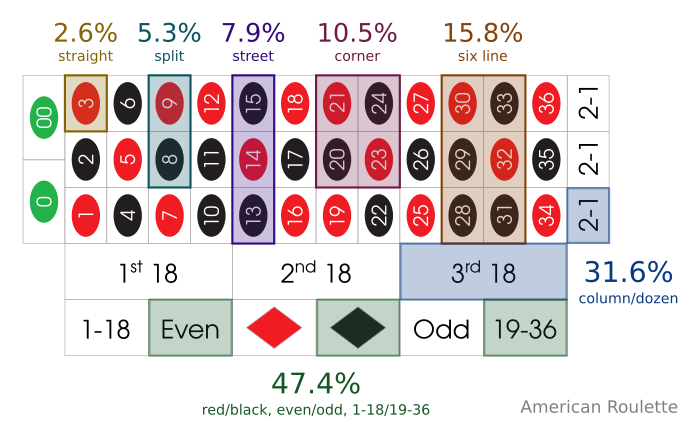
These visuals show how the extra zero pocket changes the probability structure of the game.
Real Payback Percentages for Popular Casino Games
Different games return different percentages to players.
Skill based games often have higher payback rates, while games based purely on chance may have slightly lower returns.
The following table shows typical average values across many casinos.
| Casino Game | Typical RTP | House Edge |
|---|---|---|
| Blackjack (optimal strategy) | 99.5% | 0.5% |
| Baccarat banker bet | 98.9% | 1.1% |
| European roulette | 97.3% | 2.7% |
| Craps pass line | 98.6% | 1.4% |
| Online slots (average) | 94% to 97% | 3% to 6% |
These percentages explain why experienced players often prefer games like blackjack or baccarat. The lower house edge means money lasts longer during play.
However, it is important to remember that even a high RTP does not guarantee short term winnings.
What Happens in the Short Term
The concept of payback only appears clearly over very large numbers of rounds.
In the short term, anything can happen.
A player might sit down at a slot machine and win a jackpot within minutes. Another player might lose their entire bankroll without seeing a big win.
This is because casino games rely on **Random Number Generator systems or physical randomness like shuffled cards or spinning wheels.
Each result is independent from the previous one.
Example of Short Term Variance
Imagine 100 players each spending $100 on a slot machine with 96 percent RTP.
Over time the machine might return about $9,600 of the $10,000 wagered.
But the distribution might look like this:
| Player Outcome | Example Result |
|---|---|
| Big winner | $2,000 |
| Medium winner | $300 |
| Break even | $100 |
| Small loss | $40 |
| Full loss | $0 |
The combined total may still match the expected RTP even though individual experiences vary dramatically.
What Experienced Players Say
Many experienced gamblers understand that RTP describes the long story of the game rather than the result of a single session.
Professional gambling writer Michael Shackleford, also known as the “Wizard of Odds,” has explained this idea clearly.
“The house edge is the average amount the casino expects to win from each bet over the long run.”
Players in gambling forums often describe the same reality in simpler terms.
One roulette player shared this comment after tracking hundreds of sessions:
“Some nights I leave with big wins. Other nights I lose everything. But after a year of playing, my results slowly moved close to the house edge.”
Another slot player explained:
“High RTP machines still feel random. You might win fast or lose fast. The percentage only shows up after thousands of spins.”
These experiences highlight the difference between short term luck and long term mathematics.
Why Casinos Advertise High RTP Games
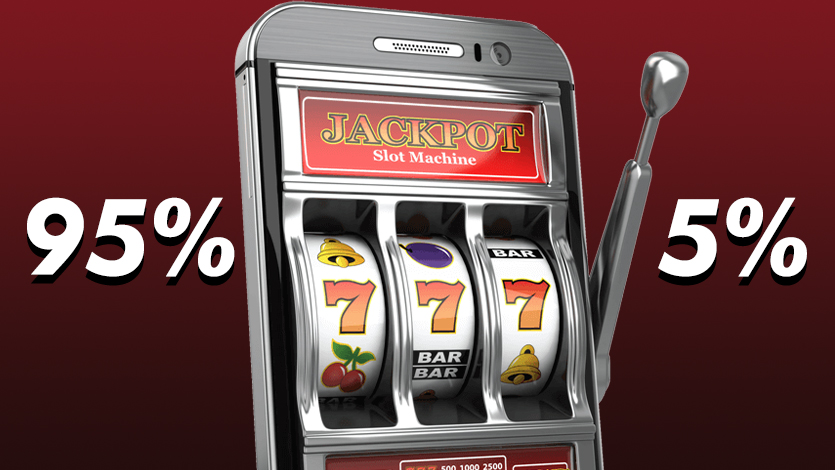
Many casinos promote games with higher payback percentages.
Online slot machines, for example, often advertise RTP values between 94 percent and 97 percent.
Higher RTP games attract players because they suggest better value for entertainment.
However, the difference between games can still matter.
Example Comparison
| Game | RTP | Expected Loss per $100 |
|---|---|---|
| Slot A | 96% | $4 |
| Slot B | 92% | $8 |
Over thousands of spins, the lower RTP game will cost players twice as much on average.
What Payback Means for Real Players
Understanding payback percentages changes how many people approach casino games.
Instead of seeing gambling as a guaranteed way to make money, players begin to view it as entertainment with a cost.
It becomes similar to visiting a theme park or attending a concert. The experience itself provides enjoyment, while the cost of play is part of the activity.
When players understand the mathematics behind casino games, several helpful habits often appear:
• Setting clear spending limits
• Choosing games with better RTP
• Playing longer sessions with smaller bets
• Accepting that losses are part of the system
This knowledge removes some of the mystery from gambling while keeping the excitement intact.
The Quiet Mathematics Behind the Fun
Casino floors are full of noise, color, and excitement. Wins trigger flashing lights and cheering sounds.
But beneath that lively surface lies a calm mathematical structure.
Every game is carefully balanced so that most of the money returns to players, while a small percentage remains with the casino.
That small percentage is enough to keep the business running, pay employees, maintain the building, and create new games.
For players, understanding this balance can make the experience feel clearer and more enjoyable.
The next time you see a spinning wheel or hear the chime of a slot machine win, remember that two forces are always working together.
Chance creates the excitement.
Mathematics quietly shapes the long term outcome.