A smarter, data-backed way to enjoy your game longer
When people sit down to play a casino game or place bets, their mind naturally goes to one thing first:
Winning.
The lights glow, the sounds feel exciting, and the imagination begins to picture a lucky moment. But experienced players quietly think about something else before they even begin:
How long will my money last?
This simple question can completely change how you experience a game. It can turn a stressful session into a relaxed one. It can stretch a short burst of play into a long, enjoyable journey.
Let us explore this idea in a clear, practical, and visual way using real examples, data, and insights.
What Your Budget Really Means
A budget is not just money. It is a plan.
When you walk into a game with ₹8,000 or $100, that number is your total playing capacity. According to responsible gambling studies, players who set a fixed budget in advance are over 60% less likely to overspend compared to those who do not plan.
That makes budgeting one of the most powerful tools you can have.
But here is the key insight:
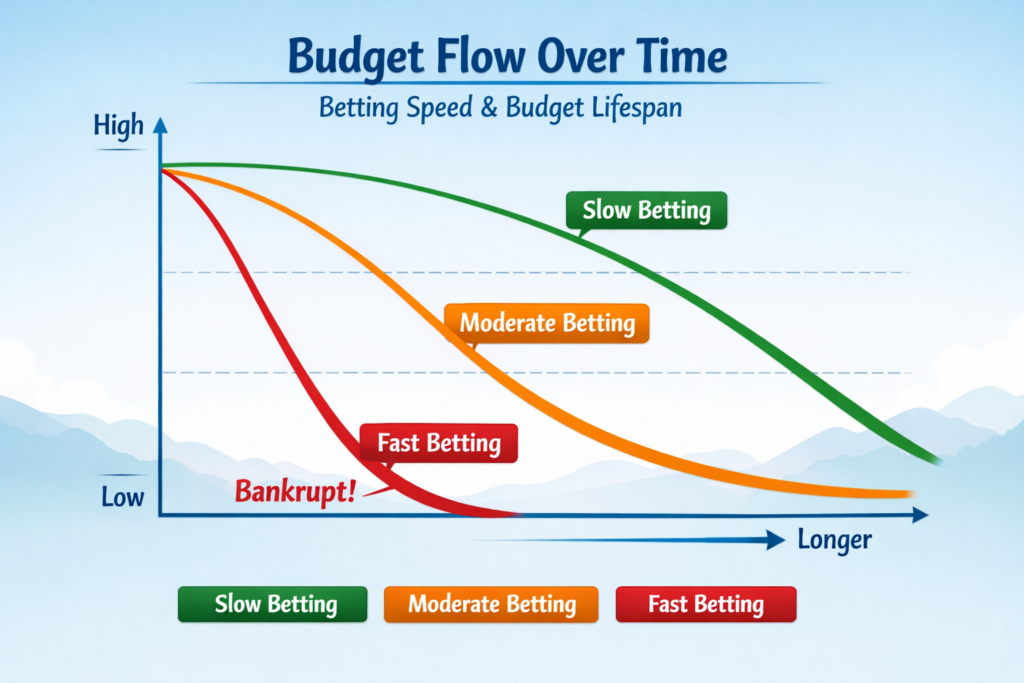
Your budget is not only about how much money you have. It is about how fast you use it.
The Science Behind Budget Lifespan
Let’s break this into a simple formula used by many experienced players:
Playing Time ≈ Budget ÷ Average Bet Size
Example:
| Budget | Bet Size | Approx Rounds You Can Play |
|---|---|---|
| ₹8,000 | ₹800 | 10 rounds |
| ₹8,000 | ₹200 | 40 rounds |
| ₹8,000 | ₹100 | 80 rounds |
Even without wins, the difference is huge.
Now add real game conditions.
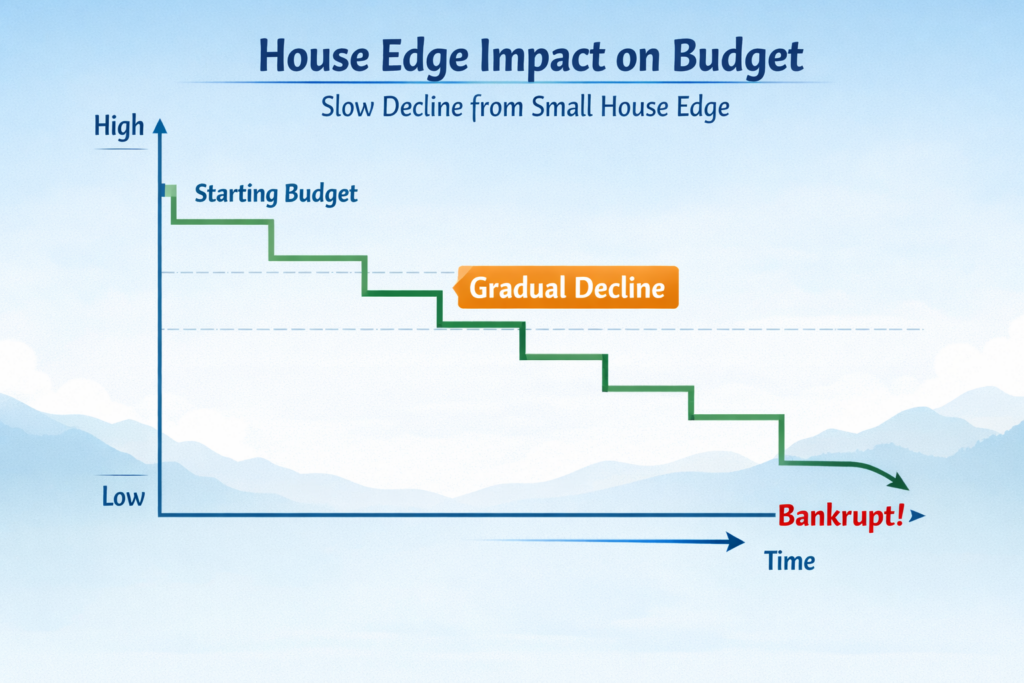
In most casino games, there is something called a house edge. For example:
| Game Type | Average House Edge |
|---|---|
| Roulette (European) | 2.7% |
| Blackjack (basic strategy) | 0.5% to 1% |
| Slot Machines | 3% to 10% |
This means that for every ₹1,000 played, the expected loss is only ₹5 to ₹100 depending on the game.
So your money usually does not disappear instantly. It slowly moves in and out of your balance over time.
This is why bet size matters more than most players think.
Real Player Insight
A player shared this experience online:
“I used to bet big because I wanted quick wins. But I noticed I was done playing in 15 minutes. When I reduced my bet size, I could play for over an hour with the same money.”
Another player said:
“It surprised me that I wasn’t losing faster. The money was just moving up and down. Smaller bets made the game feel much more enjoyable.”
These real experiences highlight something important:
Your session length depends more on your behavior than your luck.
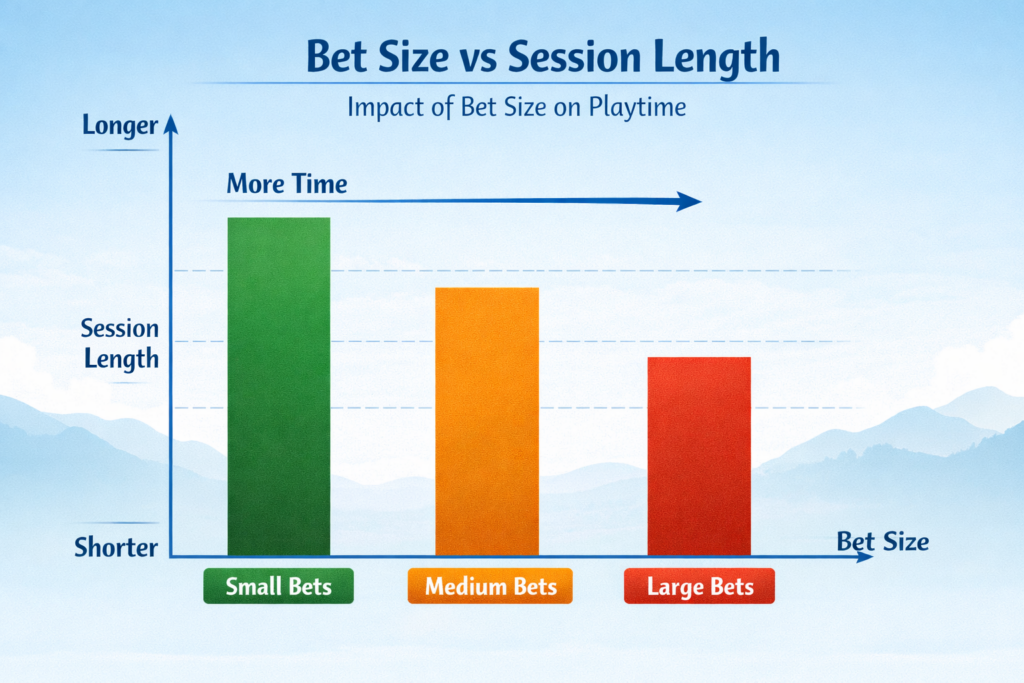
How Bet Size Changes Everything
Let’s compare two players:
Player A
- Budget: ₹8,000
- Bet: ₹800 per round
Player B
- Budget: ₹8,000
- Bet: ₹100 per round
Even if both players face the same odds:
- Player A may finish in 10 to 15 rounds
- Player B may play 70 to 100 rounds
That is a massive difference in experience.
A Simple Real-World Analogy
Think of your budget like a bottle of water during a long walk.
- Taking large gulps empties it quickly
- Taking small sips keeps it lasting longer
The amount of water is the same. The difference is in how you use it.
Money behaves exactly the same way.
The Hidden Factor: Variance
Variance means how much your results swing up and down.
- High variance games like slots: big wins but long dry spells
- Low variance games like blackjack: smaller swings, more stable balance
Statistically:
- Slot players may experience 20 to 40 consecutive losing spins
- Blackjack players often see more frequent small wins
This affects how long your budget lasts.
Expert Insight
Gambling researcher Dr. Mark Griffiths explains:
“Players often underestimate how small changes in bet size dramatically affect how long they can play.”
This is supported by multiple behavioral studies showing that players who reduce bet size by even 20% can extend playtime by nearly 50% or more.
Practical Strategy to Stretch Your Budget
Here are simple, proven methods used by experienced players:
1. Use the 1% to 5% Rule
Bet only 1% to 5% of your total budget per round
Example:
- Budget: ₹10,000
- Ideal bet: ₹100 to ₹500
This dramatically increases your session length.
2. Divide Your Budget
Break your money into smaller sessions:
| Total Budget | Divide Into | Result |
|---|---|---|
| ₹10,000 | 5 parts of ₹2,000 | Controlled sessions |
| ₹10,000 | 10 parts of ₹1,000 | Longer play control |
This prevents fast losses.
3. Track Your Time
Studies show players often underestimate playtime by up to 40%.
Set time checks:
- Every 20 to 30 minutes
- Review your remaining balance
4. Avoid Chasing Losses
One of the most common mistakes.
A real player comment:
“Every time I increased my bets to recover losses, I lost faster. When I stayed consistent, my money lasted much longer.”
What the Numbers Tell Us
Let’s look at a realistic simulation:
Scenario:
- Budget: ₹5,000
- Game: Roulette
- House edge: 2.7%
| Bet Size | Average Session Length |
|---|---|
| ₹500 | 10 to 15 minutes |
| ₹200 | 30 to 45 minutes |
| ₹100 | 60 to 90 minutes |
The difference is not luck.
It is math.
Emotional Impact of Budget Control
When your money lasts longer:
- You feel relaxed
- You enjoy the game more
- Losses feel smaller
- Wins feel meaningful
When money disappears quickly:
- Stress increases
- Decisions become rushed
- Mistakes happen more often
This is why experienced players focus more on time played rather than just money won.
Final Thought: It Is About the Journey
Games are not only about winning. They are about the experience.
Understanding how long your budget can last changes everything:
- You stop rushing
- You stop chasing
- You start enjoying
Think of it like a calm voice guiding you:
“Take your time. Use what you have wisely. Let the game unfold slowly.”
Because in the end, the real value is not just in how much you win.
It is in how long you can stay in the moment, enjoy the game, and walk away feeling in control.