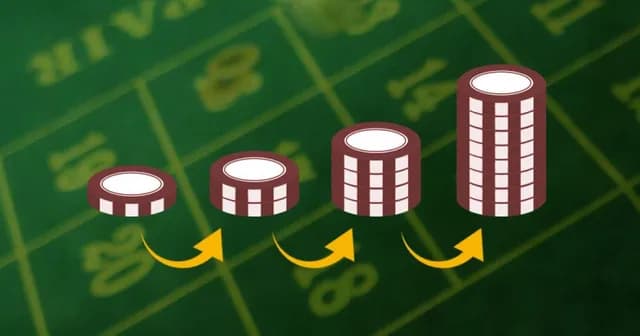
Betting systems often differ less in their predictions than in the way they determine stake sizes. Flat betting and proportional betting are two common examples. Both can provide a consistent structure for deciding how much to wager, but they behave differently as a bankroll rises or falls. Understanding that difference is useful when examining risk, managing a fixed budget, or studying the mathematics of staking systems. What Is Flat Betting? Flat betting means wagering the same fixed amount on each bet, regardless of recent results or the current bankroll. Suppose a person begins with a hypothetical ₹10,000 betting budget and…
-
-
The Martingale betting system has an appealing promise: after every loss, double the next stake, and eventually a win should recover the previous losses while leaving a small profit. The idea sounds logical when explained in a few sentences. The problem becomes clearer when the numbers are written down. Martingale does not improve the probability of a game producing a winning result. Instead, it changes how much money is exposed to each outcome, making the consequences of a losing streak increasingly severe. Click me! How the Martingale System Works Imagine a player starting with a ₹100 bet on red in…
-
A slot game’s graphics might attract attention, but the paytable explains what those graphics actually mean. It shows which symbol combinations can win, how much different outcomes pay, and what conditions activate special features. For anyone trying to understand a slot beyond its theme or animations, the paytable is one of the most useful places to start. It turns a collection of symbols and bonus effects into a set of rules that can be examined. Visit this site! Reading the Basic Paytable Most slot paytables list the symbols used in the game and show the rewards associated with particular combinations.…
-
Online slots can feel remarkably immediate. A player presses a button, the reels move, symbols line up, and the result appears within seconds. Behind that simple interaction, however, a digital system determines the outcome. This is where the random number generator, commonly known as an RNG, becomes important. Understanding what an RNG does helps explain how digital slots produce results, why previous spins do not predict future ones, and what players should look for when evaluating a game. What Is a Random Number Generator? An RNG is a system designed to produce a sequence of numbers or values that cannot…
-
Roulette is one of those casino games that looks simple until the numbers enter the picture. A player chooses a number, a colour, or a group of numbers, the wheel spins, and the ball eventually settles into a pocket. Yet a small difference in the wheel’s design can have a lasting effect on the mathematics of the game. The clearest example is the difference between European and American roulette. Both versions follow the same basic idea, but their pockets create different probabilities and different house edges. One Extra Pocket Changes the Odds A European roulette wheel contains 37 pockets, numbered…
-
Imagine a roulette wheel landing on black five times in a row. Someone watching might decide that red is now more likely because it has not appeared for several turns. The reasoning sounds intuitive: surely the sequence has to balance out eventually. That assumption illustrates the gambler’s fallacy, a cognitive bias in which people expect random outcomes to correct themselves over a short period. It can affect how people interpret gambling results, assess risk, and decide whether to place another bet. Go on! The Gambler’s Fallacy Explained In a game with independent outcomes, one result does not automatically change the…
-
Two matching symbols appear on a slot machine, but the third stops just above the winning line. The result is a loss, yet it can feel different from an ordinary losing spin. For a moment, the player may think the next attempt could finally produce the desired combination. That reaction is known as the near-miss effect. It describes the psychological response to an outcome that appears close to a win, even when the result does not qualify as one. Read on! Why Almost Winning Can Feel Different People naturally pay attention to patterns and unfinished sequences. In gambling, a near-miss…
-
Responsible gambling tools are most useful when they are set up before a session begins. Once someone is caught up in a game, it can become harder to make decisions calmly, especially after a series of losses or an unexpected win. Deposit limits, session reminders, and self-exclusion options provide different ways to create boundaries around gambling. Although these tools cannot guarantee that gambling will remain harmless, understanding what each one does can help people make more informed choices. Start With a Realistic Deposit Limit A deposit limit restricts how much money a person can add to a gambling account during…
-
A losing gambling session can change the way a person thinks about money. Someone who planned to spend a fixed amount may suddenly feel that stopping would mean accepting defeat. Another bet begins to look like an opportunity to recover what has already been lost. Before long, the original plan no longer matters as much as getting back to the starting point. This behaviour is known as chasing losses. It is a recognised pattern in gambling research, and it can occur both during a session and when someone returns to gamble another day in an attempt to recover previous losses.…
-
Walking up to a live casino table for the first time can feel intimidating. Players appear to know when to act, chips move across the layout, and the dealer follows a sequence that may not be obvious to a newcomer. Fortunately, table etiquette is mostly about paying attention, respecting other players, and allowing the game to proceed in an orderly way. The precise procedures differ between games and venues, but a few general principles can help newcomers feel more comfortable. Observe Before Joining a Game Before taking a seat, spend a few minutes watching the table. Notice the minimum and…