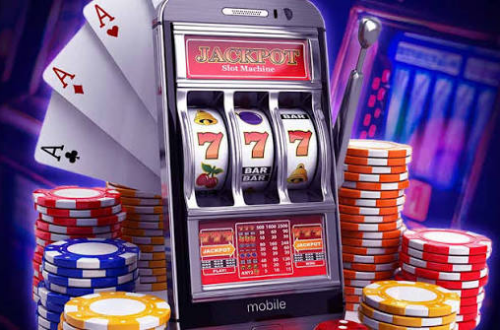
Two matching symbols appear on a slot machine, but the third stops just above the winning line. The result is a loss, yet it can feel different from an ordinary losing spin. For a moment, the player may think the next attempt could finally produce the desired combination.
That reaction is known as the near-miss effect. It describes the psychological response to an outcome that appears close to a win, even when the result does not qualify as one. Read on!
Why Almost Winning Can Feel Different
People naturally pay attention to patterns and unfinished sequences. In gambling, a near-miss can create the impression that success was within reach. The emotional response may resemble anticipation rather than the disappointment associated with a straightforward loss.
Consider a slot game in which two jackpot symbols appear on the payline and the third lands one position away. The player has not won the jackpot, but the visual arrangement can make the result feel more significant than it actually is.
A systematic review published in 2017 examined 51 experimental studies involving human participants. The researchers found that near-misses could motivate continued play, although their effects on emotions and betting behaviour varied across studies.
This distinction matters. Research does not show that every near-miss makes every player continue gambling. It does show that almost-winning outcomes can influence how people experience a game.
The Role of Visuals, Sounds, and Game Feedback
Modern digital games often combine moving symbols, animations, sound effects, and dramatic pauses. These features can make individual outcomes feel memorable.
Some games also celebrate a payout even when the amount returned is smaller than the stake. Researchers call these outcomes losses disguised as wins. For example, a player might wager ₹100 and receive a ₹20 return accompanied by celebratory sounds. The player has still lost ₹80 overall, but the presentation can make the outcome feel rewarding.
This is why it helps to separate the game’s presentation from its financial result. The relevant question is not whether an animation feels exciting, but whether the amount returned exceeds the amount staked.
A Near-Miss Is Not Evidence of a Coming Win
One of the most important distinctions is between perceived closeness and mathematical probability.
In a game with independent random outcomes, a near-miss does not make the next result more likely to be a win. The previous spin does not create an obligation for the game to produce a jackpot on the next attempt.
Actual probabilities depend on the game’s rules and design. Without reliable information about those rules, players cannot infer their chances from the visual pattern of recent results.
The same principle applies when people describe a game as being “due” for a win. A sequence of losses does not, by itself, establish that the next attempt will be more successful.
How Players Can Respond More Carefully
Recognising the near-miss effect does not require understanding every detail of game design. A few practical habits can help:
- Evaluate results using actual money won or lost, not animations or sounds.
- Set a spending limit before starting and avoid raising it after a near-miss.
- Take a break if almost-winning outcomes create an urge to continue.
- Check the published game rules instead of interpreting visual patterns as clues.
Game design can influence the way an outcome feels, but it does not change a loss into a win. Understanding that difference can help players make decisions based on the result rather than the excitement surrounding it.