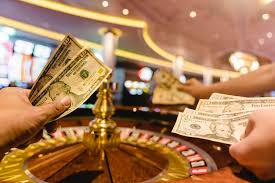

Imagine a roulette wheel landing on black five times in a row. Someone watching might decide that red is now more likely because it has not appeared for several turns. The reasoning sounds intuitive: surely the sequence has to balance out eventually.
That assumption illustrates the gambler’s fallacy, a cognitive bias in which people expect random outcomes to correct themselves over a short period. It can affect how people interpret gambling results, assess risk, and decide whether to place another bet. Go on!
The Gambler’s Fallacy Explained
In a game with independent outcomes, one result does not automatically change the probability of the next. If a fair roulette wheel has a particular probability of landing on red, five consecutive black results do not make red more likely on the next spin.
The wheel has no memory of previous results.
People nevertheless tend to search for patterns in random sequences. A run of similar outcomes can feel unusual, making the opposite result seem overdue. But an outcome can be less frequent over a short stretch without becoming more likely on the next independent attempt.
The exact probabilities depend on the game. Roulette, for example, includes a green zero on standard European and American wheels, so the chance of red is not simply one-half. The key point is that previous independent spins do not change the wheel’s underlying probabilities.
Other Biases That Can Distort Decisions
The gambler’s fallacy is only one way people can misread gambling outcomes.
Confirmation bias occurs when someone gives more attention to evidence supporting an existing belief. A player who believes a particular betting pattern works may remember the occasions when it appeared successful while overlooking the losses.
The hot-hand belief involves interpreting a recent run of success as evidence that further success is likely. Whether previous performance has predictive value depends on the activity and its underlying mechanics. A streak in an independent random game does not establish that the next result will follow the same pattern.
Loss aversion describes the tendency for losses to feel particularly painful compared with equivalent gains. In gambling, this discomfort can encourage someone to keep playing in the hope of getting back to an earlier balance.
These biases are not proof that someone lacks intelligence. They reflect common ways human beings process uncertainty, emotion, and information.
Why Recognising the Bias Matters
Cognitive biases can turn a simple decision into a series of increasingly risky choices. Someone who thinks a win is overdue might increase a stake. If the next result is another loss, they may interpret it as further evidence that a correction must be coming.
The problem is that the original assumption remains unsupported. Increasing the stake changes the amount at risk, not the underlying probability of winning.
A useful response is to separate facts from interpretations. Check the game’s published odds, distinguish independent events from systems in which results genuinely affect one another, and avoid treating a streak as a reliable prediction without evidence.
A More Rational Way to Make Decisions
Before placing a bet, ask three questions:
- Am I basing this decision on verified probabilities or a pattern I think I see?
- Would I make the same choice if the previous results had been different?
- Am I increasing my stake because the evidence supports it, or because I want to recover a loss?
These questions cannot eliminate every bias, but they can make emotional reasoning easier to recognise.
No strategy can guarantee a profit from a game with an unfavourable expected return. Understanding probability is useful not because it reveals a secret way to win, but because it helps people recognise when their intuition is giving them more confidence than the evidence justifies.